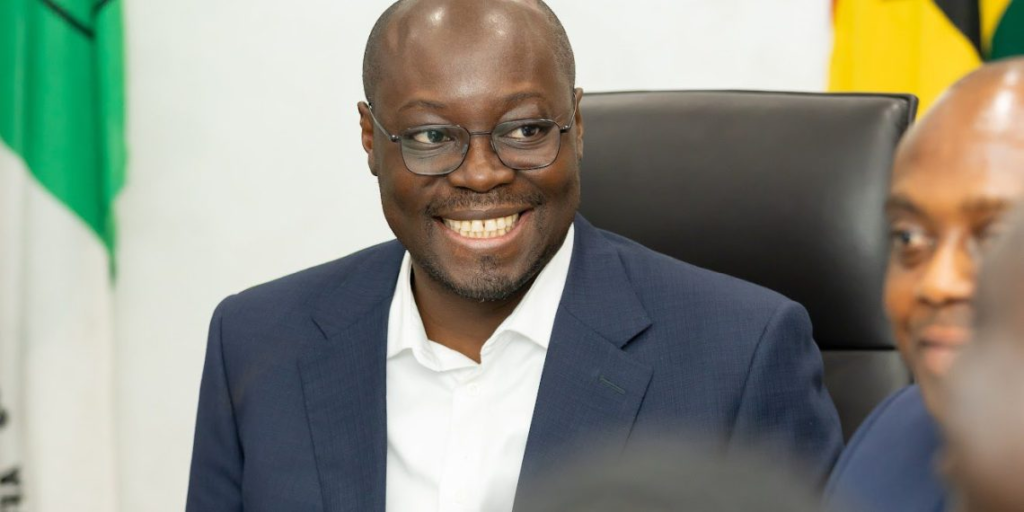
Ahead of the presentation of the State of the Nation Address, Finance Minister Dr. Cassiel Ato Forson has emphasised that government has delivered what he describes as one of the strongest fiscal and macroeconomic turnarounds in Ghana’s recent history, citing sharp improvements in inflation, interest rates, debt levels and exchange rate stability
In a detailed update on the 2025 fiscal outturn, the Minister asserted that the economy has moved from a position of stress at end-2024 — when the primary balance recorded a deficit of 3.0 percent of GDP, inflation stood at 23.8 percent, the 91-day Treasury bill rate was 27.7 percent and the cedi had depreciated by 19.2 percent against the US dollar to a position of stabilisation and surplus performance in 2025.
According to the figures released, the overall fiscal deficit on a commitment basis narrowed to 1.0 percent of GDP in 2025, outperforming the 2.8 percent target, while the primary balance swung to a surplus of 2.6 percent of GDP, exceeding the 1.5 percent target.
On a cash basis, the overall deficit was contained at 3.1 percent of GDP, better than the 3.8 percent target, with a primary surplus of 0.5 percent of GDP.
The strong fiscal outturn, combined with debt management measures, resulted in a significant reduction in public debt. Ghana’s debt stock declined by GH¢82.1 billion — from GH¢726.7 billion, equivalent to 61.8 percent of GDP in December 2024, to GH¢641.0 billion, representing 45.3 percent of GDP in December 2025.
On the macroeconomic front, provisional data show real GDP growth of 6.1 percent year-on-year in the first three quarters of 2025, driven mainly by services and agriculture. Non-oil growth was stronger at 7.5 percent over the same period, compared to 5.8 percent in 2024.
Inflation has fallen for thirteen consecutive months, declining by 19.7 percentage points from 23.5 percent in January 2025 to 3.8 percent in January 2026. Interest rates have also eased sharply, with the 91-day Treasury bill rate dropping from 27.7 percent at end-2024 to 11 percent in December 2025, and further to 6.5 percent in February 2026. The average commercial bank lending rate fell from 30.25 percent in 2024 to 20.45 percent in 2025.
Private sector credit expanded by GH¢17.1 billion in 2025, while the cedi appreciated by 40.7 percent against the US dollar by end-December 2025, reversing the 19.2 percent depreciation recorded in 2024. The external sector also strengthened, with a current account surplus of US$9.1 billion in 2025, up from US$1.5 billion in 2024, and gross international reserves rising to US$13.8 billion — equivalent to 5.7 months of import cover.
The Finance Minister maintains that the 2025 performance reflects broad-based macroeconomic gains and places public finances back on a more sustainable path heading into 2026.