A New York court has ordered Customs to begin repaying hundreds of thousands of importers — before the government could find a way to avoid it.
The US Constitution has a clause requiring that all import duties be uniform across the country.
Earlier this week, a federal judge in New York invoked it — building on the Supreme Court ruling that found US President Donald Trump had no legal authority to impose tariffs under IEEPA — to make sure hundreds of thousands of importers get their money back.
In a three-page order, Judge Richard Eaton directed Customs and Border Protection to immediately stop applying IEEPA or International Emergency Economic Powers Act to imports and to begin processing repayments.
This in turn extended the benefit of last month’s Supreme Court ruling not only to the company that brought the case but to every affected importer in the country.
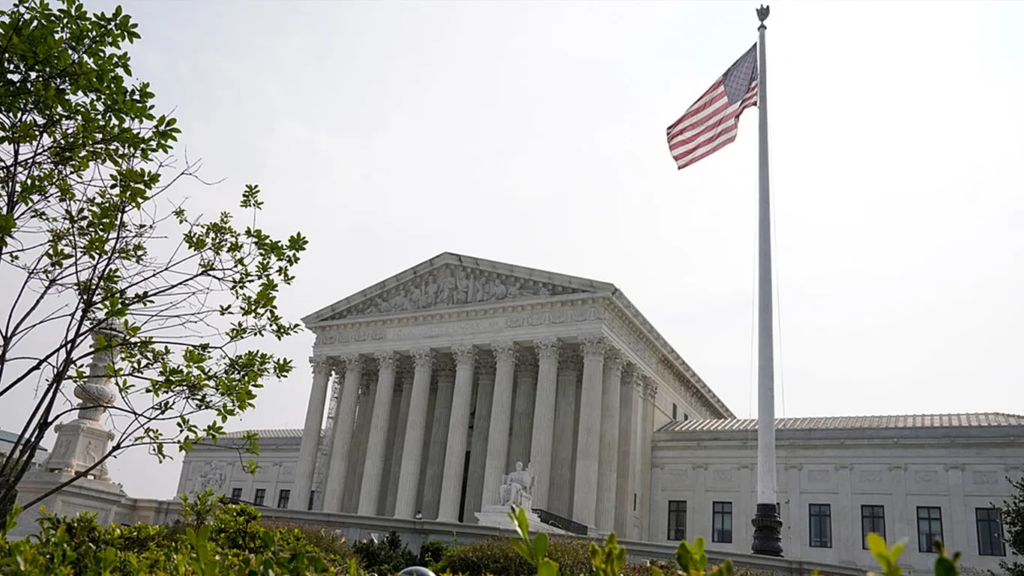
The order follows the Supreme Court’s 20 February ruling in Learning Resources, Inc v Trump, which held 6-3 that the IEEPA does not authorise the president to impose tariffs.
The majority of the US’ top court found that taxation power clearly belongs to Congress and that Trump could not unilaterally set and change tariffs by invoking emergency powers legislation.
The ruling struck down the sweeping “reciprocal” tariffs he levied on nearly every other country, as well as broader double-digit import taxes imposed the previous year.
Notably, the Supreme Court said nothing about refunds and that question was left entirely to future proceedings, which Eaton has stepped in to clarify.
Closing the exit
Eaton used the vacuum deliberately. A significant portion of his order is devoted to dismantling a preemptive government escape route.
The administration might have invoked the Supreme Court’s 2025 decision in Trump v CASA, Inc — which barred “universal injunctions” — to limit any refund order to the named plaintiff only.
Eaton rejected that argument on the grounds that it does not apply here.
Namely, the Court of International Trade was established not under the Judiciary Act of 1789 but under the Customs Courts Act of 1980, and it carries its own national jurisdiction and exclusive subject-matter authority over import disputes.
To limit relief to individual plaintiffs, he argued, would deny justice to importers who have not yet filed suit and frustrate the efficient administration of trade law — and would violate the Constitution’s requirement that all duties and imposts be uniform across the United States.
As a practical safeguard against conflicting rulings, the court’s chief judge has designated Eaton as the sole judge for all IEEPA refund cases.