Warning: This report contains details of physical and sexual abuse and discussion of suicide.
Baobao’s heart still races when she smells soil after morning rain.
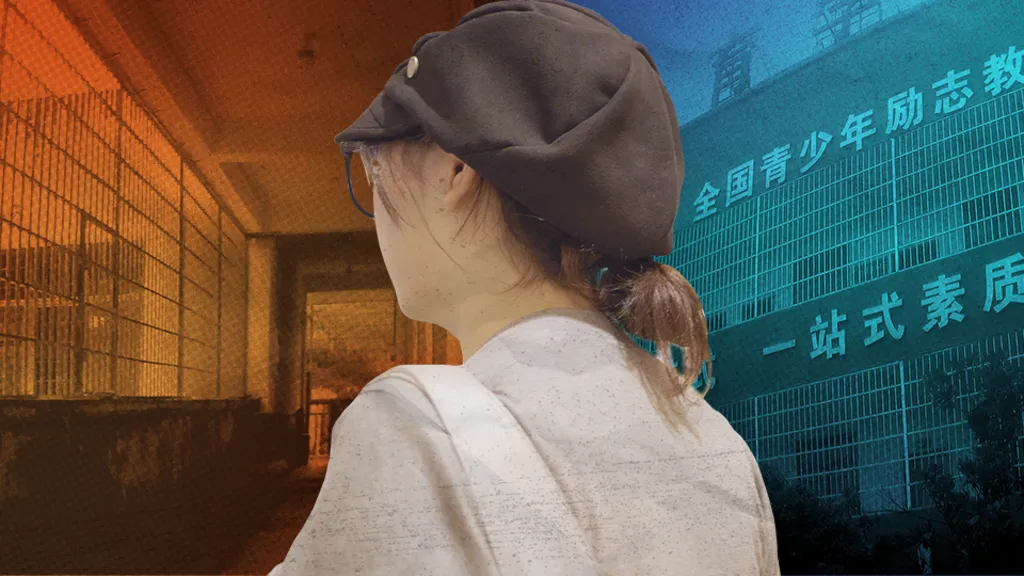
It takes her back to early military drills behind locked gates – and the constant fear that marked every one of her days at Lizheng Quality Education School.
For six months, aged 14, she barely left the red and white building in a remote Chinese village where instructors tried to “fix” young people whose families considered them rebellious or problematic.
Students who failed to comply were beaten so severely they could not sleep on their backs or sit down for days, she says.
“Every single moment was agonising,” says Baobao, now 19 and speaking under a pseudonym for fear of retribution.
She says she considered suicide, and knows other students who attempted it.
‘Raped and beaten’
A BBC Eye investigation has uncovered multiple allegations of physical abuse in the school and others in the same network, and cases of young people being abducted and taken to the institutions.
Corporal punishment has been banned in China for decades, but we have collated testimony from 23 former students who say they were beaten or forced to do extreme amounts of exercise. One says she was raped, and two others, including Baobao, say they were sexually assaulted or harassed, all by instructors.
Undercover filming has exposed how staff pose as authorities to forcibly transfer young people to their institutions.
Thirteen students say they were abducted, with parental consent, by employees pretending to be police or officials.
The accounts – from interviews by the BBC World Service, statements gathered by activists, police reports and state media – relate to five schools. These are part of a network of at least 10 schools, all of which have been run by – or have close links to – a military veteran called Li Zheng.
The centres are part of a booming industry promising anxious parents that military-style discipline will resolve concerns over young people’s disobedience, internet addiction, teenage dating and depression, as well as gender and sexual identity. Some parents even send over-18s, who are legally adults.
A series of abuse allegations have made headlines in China in recent years, in both Li Zheng schools and others.
In a few cases, arrests have been made or institutions shut down, but schools can be quick to reopen with different names or in different locations because the sector has been difficult to regulate. The BBC understands that Mr Li was arrested earlier this year, but we have discovered his associates have recently opened a new school.
Companies and individuals involved in the network could either not be reached or declined to comment. The Chinese embassy in the UK told the BBC all educational institutions are required to comply with regulations.
‘Deeply offensive’ body search
Baobao says her mother took her to the Lizheng Quality Education School in Hunan province when she began skipping classes, triggering rows which made their already difficult relationship worse.
Her mother left while she was being shown around the school, she says, and she then realised she was not allowed to leave: “They said if I behaved well, I might be able to get out.”
Baobao initially tried to kick and punch the instructors, she says, but decided to comply when they tried to restrain her with her own shoelaces. Later, she was searched. She describes the way this was done as sexual assault. “I found it deeply offensive… she touched all my sensitive areas.”
She says her mother paid about 40,000 yuan ($5,700; £4,300) for six months at the institution, and she was not given any academic lessons. Few disciplinary schools offer these, and some that do charge extra for them.
The school is still operating, now known as Quality Education for Teenagers, with around 300 students, aged eight to 18.
Undercover footage was filmed there earlier this year by a woman posing as a parent considering enrolling her fictional 15-year-old son. She said he was smoking, dating and driving her car.
She was shown locked gates on staircases, metal grilles along open-air corridors and CCTV monitoring dormitories where children rest, get changed and shower.
A staff member told her it would take at least six months to improve the teenager’s behaviour, but under a “three-year warranty” she could send him back paying for just food and accommodation if he reverted to his old ways.
She was told not to tell him about the new school. “When we arrange pick-ups, we tell a white lie,” the staff member said.
She explained instructors impersonating officials from the “internet regulator” would say they needed him to help with an investigation, and take him to the centre. “If this fails, several instructors will simply restrain him and carry him to the vehicle,” she said.
Another former student, Zhang Enxu, now aged 20, says she had a similar experience when she was taken to a different school in the network.
Then 19, she had left home, frustrated with her parents’ refusal to accept her transgender identity and her decision to live as a woman – she was registered male at birth. She says she had returned for a family visit to her grandmother’s grave, when three men claiming to be police appeared, saying her details had been used in fraud.
“They forcibly dragged me into the car. My parents stood by as I was taken away,” she says.
She was taken to Shengbo Youth Psychological Growth Training School in Hunan where she says she was beaten, leaving her with hearing loss in one ear, and later raped.
In the undercover footage from the school Baobao attended, a staff member says there are no beatings: “We change the behaviour of youngsters with military training and counselling.”
But Baobao and Enxu describe a very different experience.
“Corporal punishment is ever-present,” says Baobao. “If your dance routines or military boxing lack precision, or are poorly executed, you will be punished.”
She said the instructors would use a pipe, raising it overhead before “bringing it down with force” on her classmates. “Where they hit you would turn black. You get severe bruising.”
Videos obtained and verified by the BBC, that were filmed at another of Li Zheng’s schools, show instructors raising a rod high and striking students’ hands.
Enxu says the students were forced to do “enormous” amounts of physical training. She said instructions to carry out exercises like push-ups “might start at a thousand repetitions”.
She also says she was attacked in her dormitory by an instructor on night duty: “He grabbed me by the hair and dragged me to the floor, then he sexually assaulted me.”
Social pressure to have academically successful children plays a major role in parents’ decisions – particularly among urban middle-class families – to send their children to disciplinary schools, says Dr Yichen Rao, an anthropologist at Utrecht University in the Netherlands.
He has studied internet addiction centres for young people in China, and says lack of support in the school system, anxiety, and conflict within the family can combine to make parents “feel that they have no other choices”.
Baobao’s mother declined to comment. Her daughter says she can now “understand both sides”: “I think she was brainwashed by the slogans used to sell the school. She was desperate for me to become more obedient… to be the daughter she always wanted.”
Baobao managed to leave after feigning an eye problem. Her mother simply said “let’s turn the page”, leaving her angry and confused, she recalls.
Viral letters
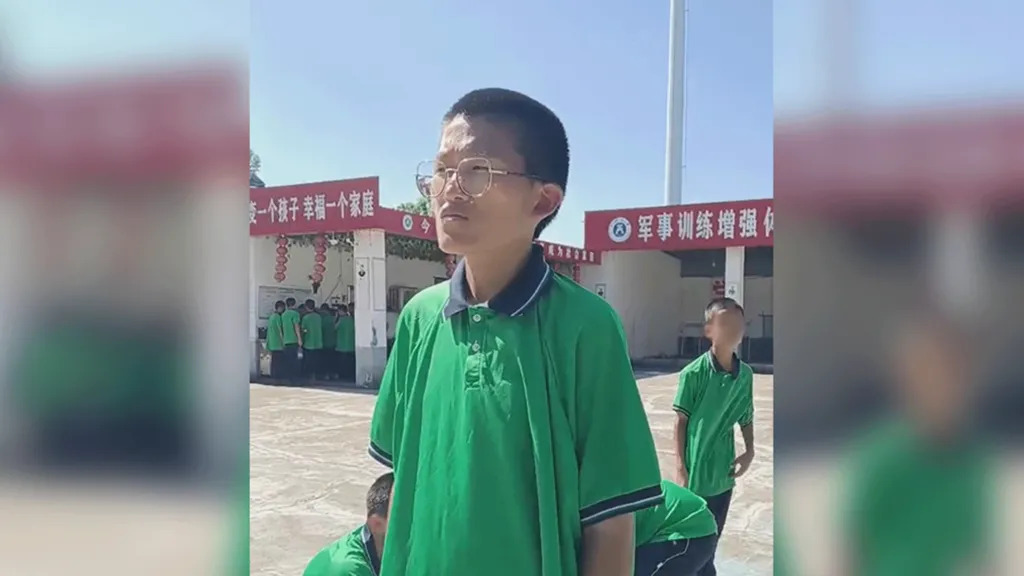
Enxu’s ordeal ended after a month. Her friends realised she was missing and contacted the police, who then located her and shared a video of her at the school. Her friend Wang Yuhang identified the school by asking in online groups about the green uniform she was wearing.
Enxu discreetly documented her experience in letters that were smuggled out and posted online. They went viral and as public pressure grew, the police intervened and she was allowed to leave.
Twelve days later, authorities announced Shengbo school was closing, but made no reference to the abuse Enxu alleged, saying, however, that the school had violated administrative regulations.
She says the police later told her Li Zheng had been arrested, accused of involvement in organised crime. The police did not respond to BBC requests for information about Enxu’s case and Mr Li. The local education department have also not responded.