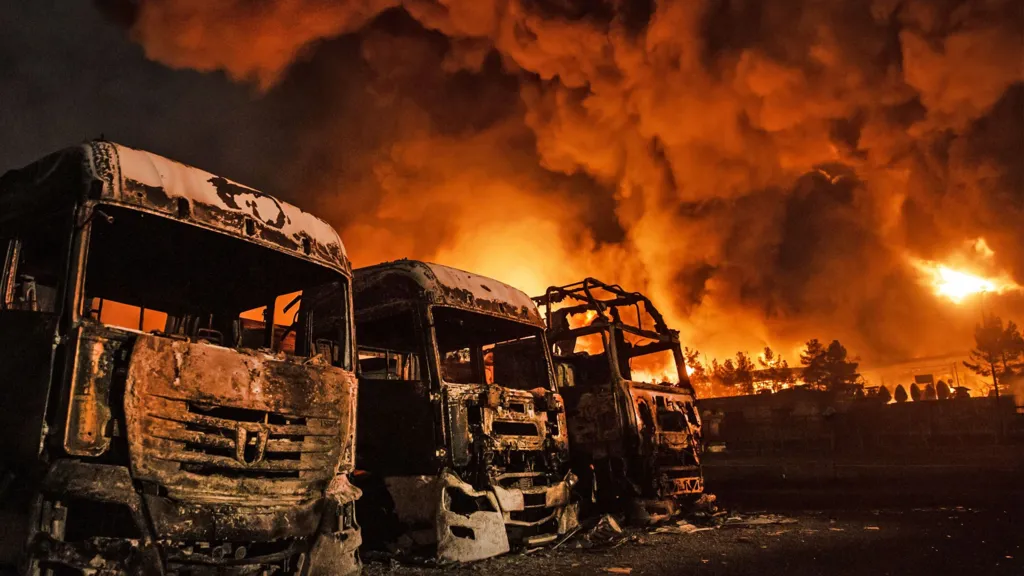
G7 nations will hold an emergency meeting on Monday to discuss surging oil prices as crudejumped above $100 a barrel and shares fell over the escalating US-Israeli war with Iran.
Finance ministers from leading industrialised countries, including UK Chancellor Rachel Reeves, will gather to discuss the economic impact of the conflict.
The oil price reached nearly $120 over fears of a lengthy disruption to supplies through the key Strait of Hormuz shipping route, triggering stock market sell-offs across the US, Europe and Asia.
According to reports, the G7 meeting will discuss a joint release of petroleum from reserves, overseen by the International Energy Agency (IEA).
If reserves are released by G7 countries, as reported by the Financial Times, it would be the first time since 2022 following Russia’s full-scale invasion of Ukraine.
Major disruption to energy supplies from the region threatens to push up prices for consumers and businesses around the world. Rising inflation could lead to fewer interest rate cuts by central banks.
About a fifth of the world’s oil supply is usually shipped through the Strait of Hormuz. But traffic through the narrow passage has all but halted since the war started more than a week ago.
The US and Israel launched fresh waves of airstrikes across Iran over the weekend, hitting multiple targets including oil depots.
Meanwhile, Iran targeted energy infrastructure in neighbouring Gulf states. Overnight, Saudi Arabia said it had intercepted and destroyed two waves of drones heading towards a major oilfield.
Last week the markets had been relatively relaxed about the seemingly nightmare scenario of millions of barrels of crude and liquefied gas trapped in the Gulf.
But the escalations over the weekend, alongside scenes of destruction of energy infrastructure both in Iran and across the Gulf, saw the markets take rapid fright.
On Monday morning in Asia, the price of Brent crude jumped by more than 25% to touch $119.50 a barrel at one point before falling back to around $102.
US West Texas Intermediate (WTI) crude saw similar movements and was trading at about $101 a barrel.
“The question everyone is asking themselves is, what is the duration of this conflict?” Paul Gooden, head of natural resources at NinetyOne Asset Management, told the BBC’s Today programme.
“The longer it goes on, the more nervous the oil markets are going to be.”
He added that the oil price could rise to a level where “you see so-called demand destruction”, where consumers cut back their consumption of oil, which he considered to be $120-$150 a barrel.
“I think temporarily you could see an oil price in that range. I don’t think it can stay there… at some point there’ll be a resolution.”
Gas prices also jumped. UK gas prices for month-ahead delivery surged by nearly 25% to 171p a therm when trading started on Monday, before slipping back to about 149p a therm.
Gas prices have now almost doubled since before the war in Iran began, although they remain well below the 640p peak reached in 2022 following Russia’s invasion of Ukraine.