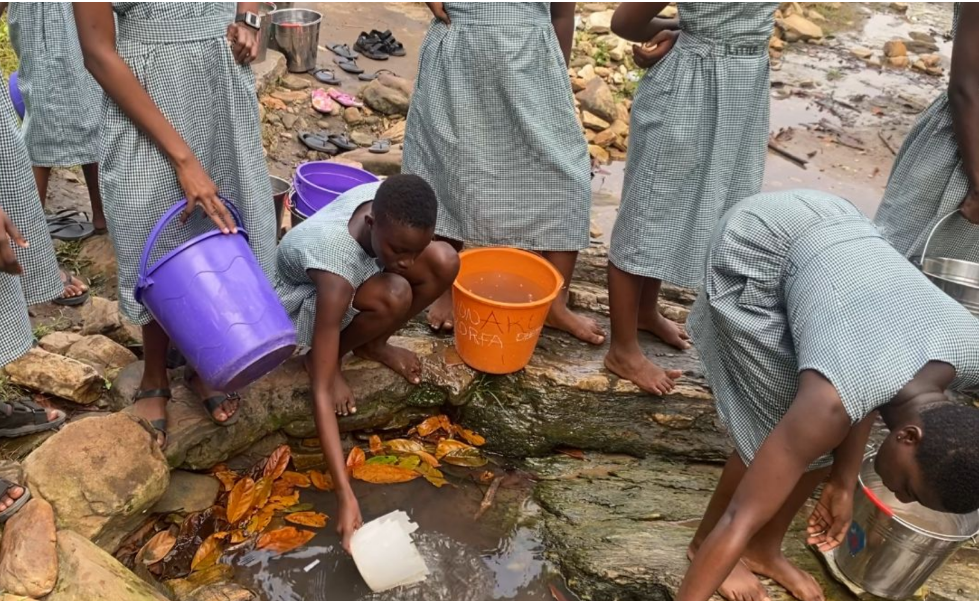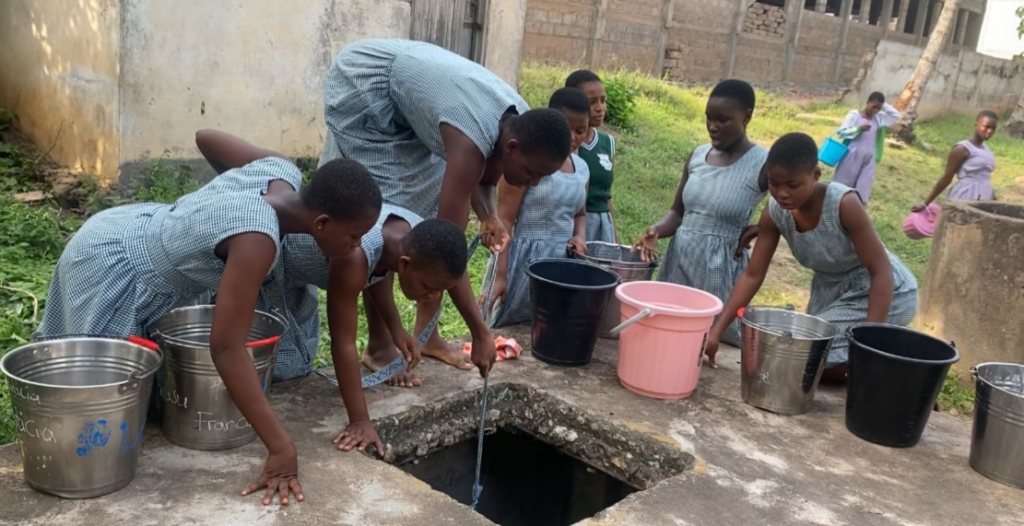
Students of Taviefe Senior High School in the Ho Municipality are grappling with a persistent lack of potable water on campus, a situation they say is affecting their health, comfort, and academic life.
From the early hours of the morning to late in the evening, students are often seen walking long distances within and sometimes outside the school compound, buckets and gallons in hand, in search of water for bathing, cooking, and other daily activities.
Many describe the routine as exhausting and disruptive.
“Fetching water has become part of our daily struggle. Sometimes you walk far and still come back with water you are not confident using,” a student, Bless Nyake, told Channel One News.
On campus, the few underground tanks available supply water that students describe as unsafe. The water is often cloudy, with visible particles settling at the bottom, and at times emits an unpleasant smell.
Students say the supply to the tanks is irregular, leaving them with little choice but to rely on the water despite concerns about its quality.
According to second-year students Faith Akordor and Sandra Agbloyor, even the tank water is not clean, but when there is no alternative, they are forced to use it for bathing and other domestic activities.
When the tanks run dry, the situation worsens, as a nearby stream becomes the only alternative source of water for many students. Tadpoles and other aquatic organisms are visible in the water, making it unsafe for drinking. Despite the obvious health risks, students say the lack of adequate water supply on campus compels them to depend on the stream.
“We know the stream water is not safe, but when there is no water on campus, that is where we go,” they said.
The students describe the situation as worrying and are appealing to the government and other stakeholders for urgent intervention to provide a reliable source of potable water and improve living conditions on campus.
The headmaster of the school, Sadrack Abiwu, confirmed the challenge in an interview with Channel One News, describing it as one of the institution’s major setbacks.
“The lack of potable water continues to affect the welfare of our students. Management has made several appeals because access to clean water is critical to health, sanitation, and effective teaching and learning,” he said.