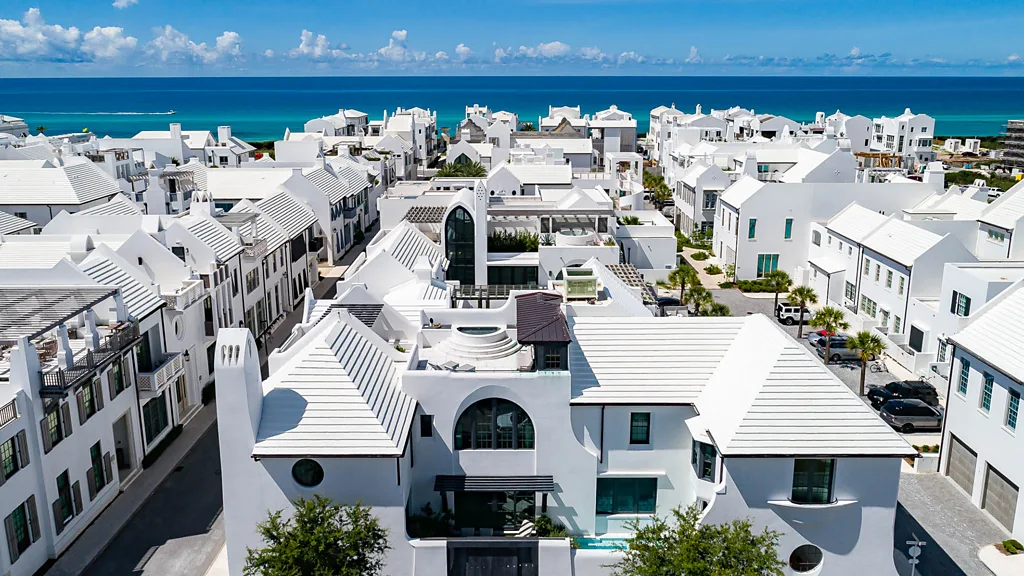
The striking all-white architecture of Alys Beach may conjure Europe and the Caribbean, but its walkable streets and luminous Gulf beaches are pure Florida.
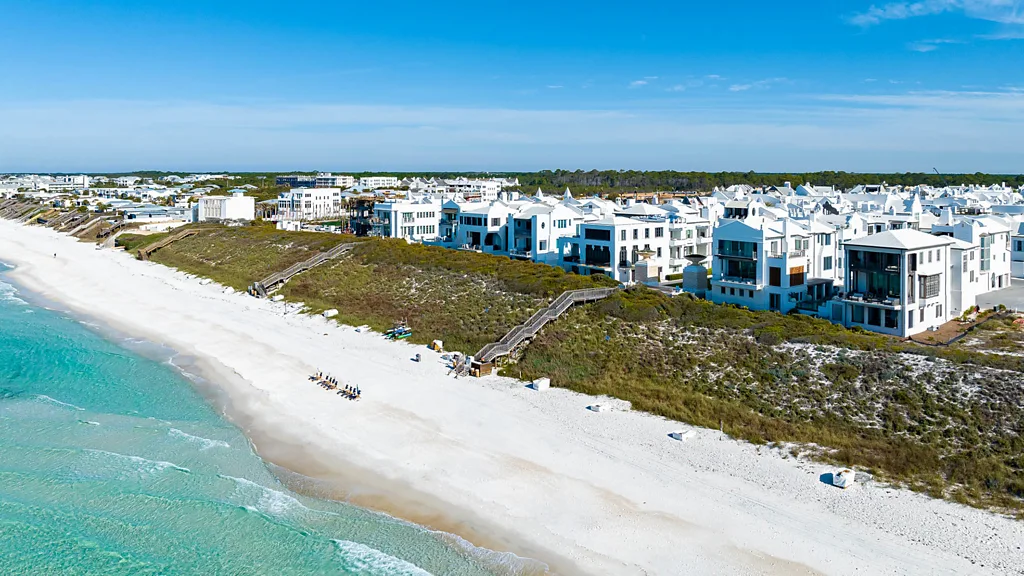
Golden sunlight kisses your bare arms as you stroll through a maze of whitewashed concrete buildings, stark against a bright blue sky. Your sandals tread stone pathways, passing Grecian trellises draped in purple bougainvillea. In the distance is a chalk-white beach with sand soft as sifted sugar and an emerald green sea: a backdrop from Homeric myth. But as you make your way past chic boutiques and pavement restaurants, a Moorish archway pops into view; further down, an Andalusian-style courtyard. Elegant homes are topped with Dutch gabled roofs. There’s not a car in sight, just the tinkling chime of bicycle bells.
You’d be forgiven for wondering where in the world you are: Amsterdam, Andalusia, Greece. But look closely; it’s Gulf oysters on those bistro plates, and your waiter speaks with a southern US drawl. This is no European escape; you’re in the Florida panhandle.
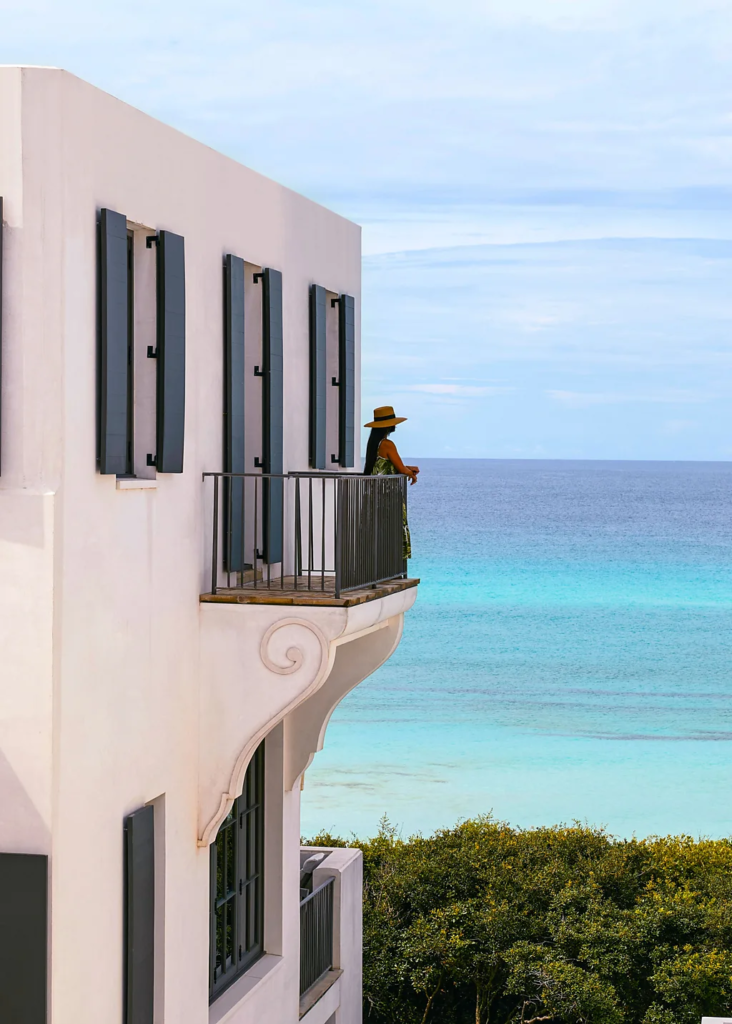
The whitewashed enclave is found towards the eastern end of 30A, Florida’s most scenic highway. Along the 20-mile coastal corridor, Gulf-front restaurants serve freshly caught seafood, while state parks, colourful beach towns and sugar-sand beaches beg you to pull over and explore.
But at Alys Beach, you won’t find the typical Floridian tiki huts and manatee mailboxes.
“The interesting thing about Alys is [its] architectural language so strongly references familiar architectural languages. It feels like you are somewhere you can’t quite place,” says Diana Lane, the town’s director of public relations.
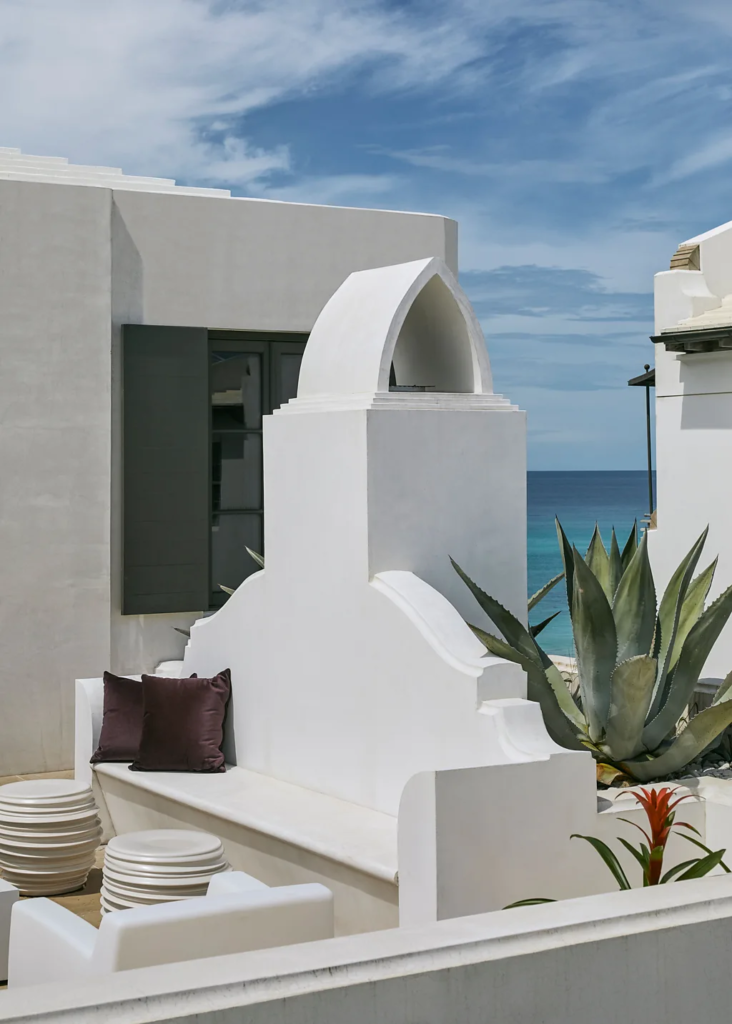
Dating to just 2004, Alys Beach has become a regional icon thanks to its all-white palette, which contrasts sharply with the sherbet-coloured cottages, stilt-built homes and towering condos commonly associated with other coastal areas in the Sunshine State. Most visitors immediately liken it to Greece, says Lane: “I think that’s because of the white masonry.” But the town’s design DNA was actually inspired by Bermuda and Central America, among other places. Oasis-like interior courtyards with flowing fountains recall residences in Antigua, Guatemala, while island-style stepped roofs gently harvest rain. Four steepled Bermudian butteries flank the town’s entrance.
There’s even a hint of New Orleans. “Walking around, you’ll see balcony rails on a second-storey porch or veranda overlooking a courtyard area that feels very reminiscent of Creole design,” says Lane.
Better living
Though the town is most recognised for its striking all-white environs, its engineers had something different in mind.
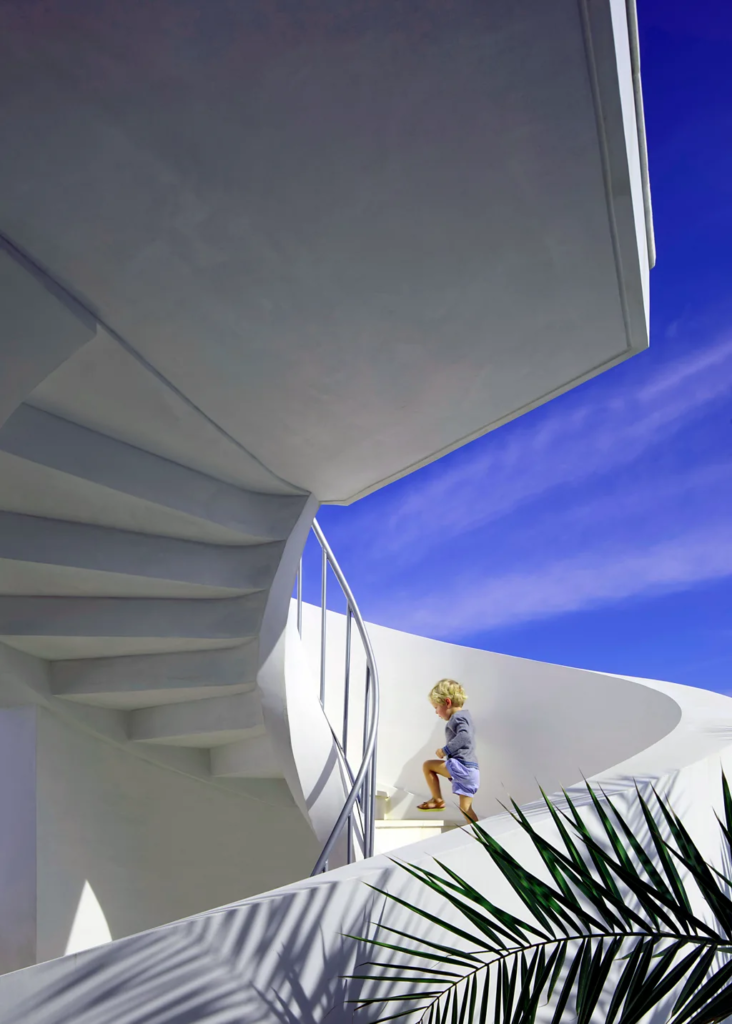
Founded by the Stephens family, Alys Beach – named for the family matriarch – was planned as a centre of New Urbanism, championing walkability, sustainability and community connection. Pioneering New Urbanist Duany Plater-Zyberk, the designer of neighbouring New Urbanist communities along Highway 30A like Seaside and Rosemary Beach, was tasked with the master plan, while town architects Erik Vogt and Marieanne Khoury-Vogt drew upon their travels to design the town’s unique look. They also helped develop its groundbreaking green policies. Every residence in Alys Beach is certified to Florida Green Building Coalition (FGBC) standards, prioritising energy efficiency, water conservation and hurricane resilience.
Cars are only allowed in designated parking areas, and the town centre is intentionally dense. A grid of vehicular streets connect to parking courts that link to pedestrian paths.
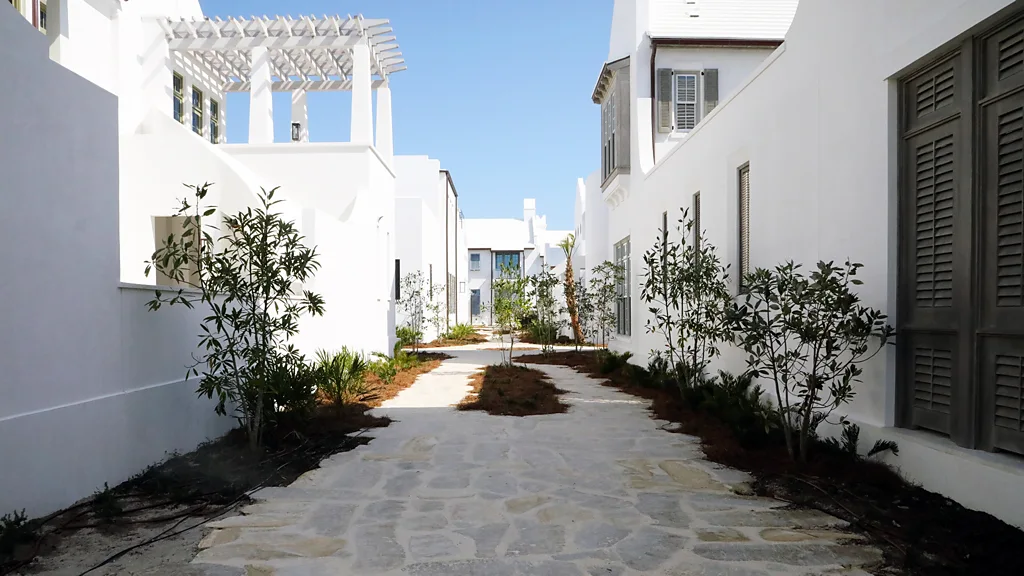
“Everything is connected easily to encourage walkability,” says Lane. “People are immediately joining common space when they step out of their private residence. The idea is for residents and guests to park their car and walk to anything they need during their stay – restaurants, shops, amenities, even a market for sundries and necessities.” The town’s custom metal bike racks are strategically placed throughout the community – and painted white, of course.
Alys Beach’s pedestrian-friendly nature and aesthetics drew Atlanta-based podcast host Julie Silber and her husband to purchase a holiday home here in 2021.
“Every community [on 30A] really has its own vibe,” says Silber. She describes nearby WaterColor as having a “preppy feel”, while Seaside, the pioneering New Urbanist community made famous by the 1998 film The Truman Show, skews a “bit more bohemian” with its sea of lavender and pink homes.
She likens Alys Beach’s sophistication – with its excellent restaurants and cafes and exclusive beach club above the dunes – “to the feeling you get in St Bart’s, perhaps, or St Tropez”.
Visitors should venture beyond the town, too. Just west of Alys Beach, Inlet Beach is home to 30A’s latest development, Kaiya Beach Resort, also designed by the Vogts with a similar white aesthetic. In Seaside, a line-up of vintage Airstream trailers-turned-food trucks lures locals and visitors to Seaside Airstream Row for lobster grilled cheese sandwiches and açaí bowls al fresco. Further west in quirkier Grayton Beach, The Red Bar serves southern fare like seafood gumbo alongside live jazz, while Grayton Beach State Park is the place to kayak around the area’s rare coastal dune lakes.
For Allen, Alys Beach is 30A’s “crown jewel”.
Source:BBC